



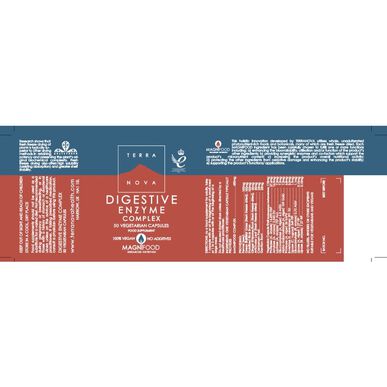

The Digestive Enzyme Complex features a set of enzymes that improve the digestive process by increasing the speed of the biochemical reaction of this mechanism.
Enzymes are necessary for the digestion of fats, proteins, and carbohydrates, and by virtue of their lipolytic, proteolytic, and glycolytic actions, they allow the breakdown of fats, proteins, and carbohydrates into their simpler constituents, namely fatty acids, short-chain polypeptides, and monosaccharides, allowing the final attack by gastric, biliary, and pancreatic juices, and subsequent assimilation. Among the enzymes included in this formula, the following stand out:
Protease occurs naturally in all organisms and corresponds to 1-5% of their genetic content. This enzyme is involved in a wide variety of metabolic reactions, mainly in the digestion of proteins from food. The protease secreted by myeloid leukocytes stimulates the digestion of proteins by hydrolysis. Amylase is an enzyme produced by the pancreas and salivary glands, which acts in the digestion of starch and glycogen contained in food. Lactase catalyzes the hydrolysis of lactose into glucose and galactose and is essential for the digestion of milk. In adults who stop drinking milk, the production of this enzyme may decrease and cause difficulty in digesting milk or lactose intolerance. The enzyme invertase is capable of hydrolyzing sucrose. Lipase is a soluble enzyme that saponifies fats. This enzyme is found in the blood, lymph, viscera, and pancreatic juice. Maintains the body's circulating fat levels within the normal range.
Comment